Short answer
If you want a television that can look like art, buy The Frame; if you want art that happens to be digital, the better alternatives are cordless color E-Ink frames, LCD art canvases and modern digital frames — none of which need a power outlet behind them, and several of which need no subscription at all. The seven below cover every budget from about $150 to $1,500+. We build one of them, so we have said plainly under each entry who it is for and where The Frame still wins.
Key facts
- Samsung’s Art Store costs $4.99 per month (about $50 per year) for the 4,000+ work library; your own photos and a rotating free selection cost nothing.
- The Frame ships in 55, 65, 75 and 85 inch sizes — and every one of them needs mains power and a cable route.
- Cordless color E-Ink frames run months per charge because the image is held without power.
- Subscription policies differ sharply: NETGEAR Meural charges $39.95 per year for its library, while Vieunite states no subscription for the lifetime of the Textura.
Why people look for a Frame TV alternative
In our conversations with buyers, four reasons come up again and again — and only one of them is price.
- The cord. The Frame’s One Connect box tidies the cabling, but a cable still has to reach the wall. The places people most want art — stair landings, above a mantel, a hallway gallery wall — are exactly the places without an outlet.
- The subscription. Renting a library forever to decorate a wall you look at every day feels wrong to a lot of people, even at $4.99 a month.
- The glow. Matte anti-glare glass helps enormously, but a backlit panel is still a light source in a dark room. A printed picture is not.
- It is still a television. Some buyers do not want another screen in the room at all — they want the wall to read as art, full stop.
If none of those bother you, stop reading and buy The Frame: it is a genuinely good television and the art mode is the best in its class. If two or more bother you, the list below exists for you.
Three categories, not one
“Frame TV alternative” hides three different products, and choosing the wrong category is the most common mistake we see.
| Category | What it is | Cordless? | Plays video? | Best when |
|---|---|---|---|---|
| Color E-Ink art frame | Reflective ePaper in a real frame | Yes — months per charge | No | You want the wall to read as a print |
| LCD art canvas | Matte LCD tuned for artwork | No | Some | You want vivid color and larger sizes |
| Digital photo frame | Small LCD for family photos | Some models | Yes | Shelf or counter, frequent new photos |
Source: einksmart product category analysis, July 2026. See our e-paper frame vs digital photo frame comparison for the first two categories in depth.
The 7 alternatives
1. PocketBook InkPoster — the poster-scale cordless option
Best for: replacing a large printed poster where no outlet exists. InkPoster ships the widest color E-Ink lineup we know of — 13.3, 28.5 and 31.5 inch — with battery claims up to a year, from $599. At 31.5 inches it is the closest any cordless product gets to Frame TV scale. The trade: no video, a roughly 12-second image change, and large-panel pricing.
2. Aura Ink — the easiest app experience
Best for: a shared family photo wall that should not look like a screen. Aura brought a decade of digital-frame software to a 13.3 inch E-Ink panel at $499, with roughly three months of battery at one image change a day and a subtle front light for dim rooms. It is photos-only and one size, which keeps it simple.
3. BLOOMIN8 EinkCanvas — the price breaker
Best for: buyers waiting for cordless art to get cheap. BLOOMIN8 pairs Spectra 6 panels with AI-generated art and announced a sub-$200 10-inch model — the first sign of this category reaching impulse-purchase pricing. Younger brand, evolving software: budget accordingly.
4. InkJoy — the rendering-first challenger
Best for: photography buffs who care how images are converted. InkJoy’s pitch is that software, not glass, makes the picture: its rendering pipeline re-processes each image for the six-pigment palette. Crowdfunded, so treat ship dates as estimates.
einksmart Canvas: samples, OEM and project displays
Best for: B2B samples, OEM frames and project deployments. The Canvas range includes a 13.3-inch aluminium frame, a 13.3-inch OEM insert, an A2 28.5-inch display and a 31.5-inch landscape display. Sample and project pricing is quoted by configuration. Software, power and installation differ by model; scheduling, groups and CMS require a demonstrated, agreed project scope. This is not a ready-made family photo-sharing service.
6. NETGEAR Meural Canvas II — the LCD art canvas
Best for: vivid color at 21 or 27 inches, with mains power available. Meural is the established LCD art canvas: $599.99 (21 inch) and $699.99 (27 inch) list, frequently discounted to $399.99 and $499.99, with a $39.95-per-year membership for the curated library. It needs an outlet, and it glows — but the color is richer than any ePaper panel.
7. Vieunite Textura — the no-subscription LCD
Best for: buyers who hate subscriptions but want LCD color. The Textura is a textured-finish 27-inch canvas at about £490, and Vieunite states there is no subscription for the lifetime of the product or app. Corded like any LCD, but the ownership model is the cleanest in the LCD category.
All seven compared
| Alternative | Type | Sizes | Price (US) | Cordless | Subscription |
|---|---|---|---|---|---|
| Samsung The Frame (reference) | QLED TV | 55–85" | TV pricing | No | $4.99/mo for full library |
| PocketBook InkPoster | Color E-Ink | 13.3 / 28.5 / 31.5" | from $599 | Yes | Check plan |
| Aura Ink | Color E-Ink | 13.3" | $499 | Yes | No |
| BLOOMIN8 EinkCanvas | Color E-Ink | 10 / 13.3 / 28.5" | 10" targeted sub-$200 | Yes | Check plan |
| InkJoy | Color E-Ink | 13.3" | Crowdfunding pricing | Yes | Check plan |
| einksmart Canvas | Color E-Ink | 13.3 / 28.5 / 31.5 inches | Request a quote | By configuration | Confirm project scope |
| NETGEAR Meural Canvas II | LCD canvas | 21 / 27" | $599.99 / $699.99 list | No | $39.95/yr membership |
| Vieunite Textura | LCD canvas | 27" | about £490 | No | None, lifetime |
Sources: samsung.com The Frame product pages and Art Store terms; inkposter.com; auraframes.com; bloomin8.com; netgear.com Meural product and membership pages; vieunite.com. Prices checked July 2026 — confirm current pricing before purchase.
The subscription question: renting versus owning your walls
You do not rent the painting in your hallway. The strongest argument against art subscriptions is not arithmetic — it is that after five years of paying, nothing on your wall belongs to you.
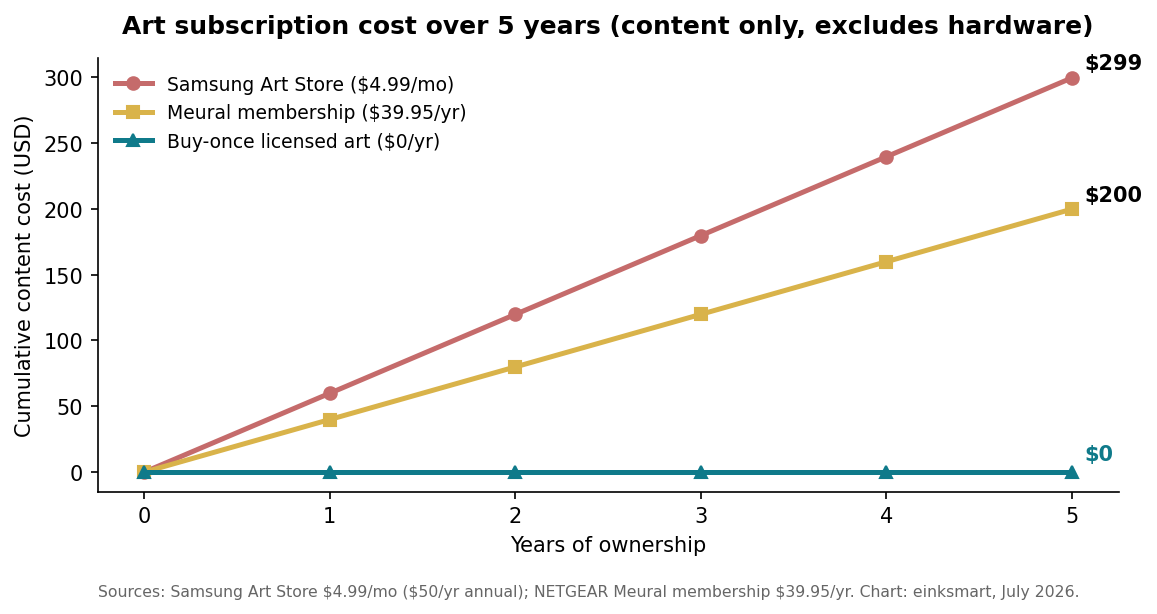
The arithmetic is real but modest: about $300 over five years for Samsung’s library, about $200 for Meural’s. For someone buying a 65-inch television, that is not the deciding number. The ownership question is.
How often will you actually change the art?
Far less often than the subscription assumes. This is the uncomfortable fact underneath every art-library business model: most people who hang a picture look at the same picture for years. The impulse to rotate art is real but seasonal — a spring set, a holiday piece, something warmer in winter. Chinese scholarly tradition formalised exactly this centuries ago, changing hanging scrolls with the solar terms rather than with the mood of the week.
If your true rhythm is four to twelve changes a year, a perpetual monthly fee for a 4,000-work library is poor value, and a buy-once model — where you license a specific work, keep it, and add another when a season turns — fits better. That is the model we chose to build, working directly with artists on per-work licences rather than pooling everything into a rental library.
What does “no subscription” actually mean?
Ask three questions before believing the phrase. Does the frame still work offline and unsubscribed? Can you load your own images without a paid tier? And is the licensed art you paid for still yours if the company changes its plans? Vieunite’s lifetime-no-subscription statement and Aura’s free app both answer the first two cleanly; the third is where buyers should read carefully, whichever brand they choose.
The cord problem: why battery placement changes the answer
A wall socket is not where art belongs, and that single constraint eliminates most alternatives before price is even discussed. Ask an interior designer where a picture should hang and you get eye level on a feature wall, centred above a mantel, climbing a stair landing, or grouped into a gallery wall. Ask an electrician where the outlets are and you get skirting-board height, behind furniture, near a desk.
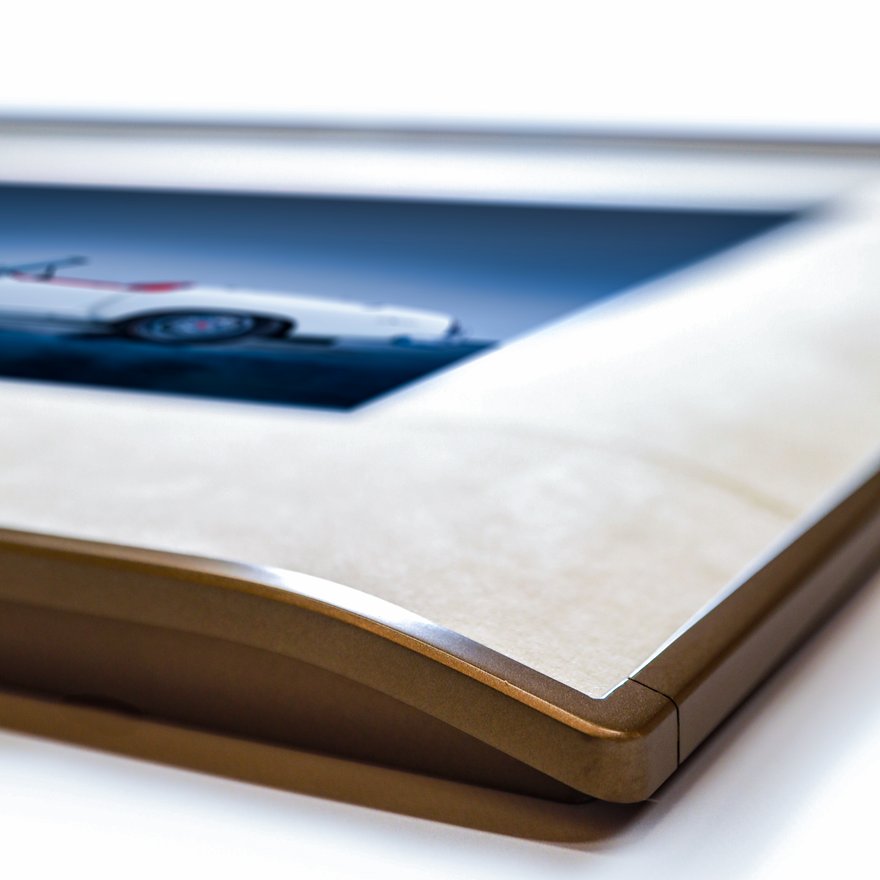
The Frame solves cable management elegantly, but it does not solve cable existence. A cordless E-Ink frame hangs on a standard picture hook — no conduit, no electrician, no trunking painted to match the wall — because a bistable display draws power only when the image changes, which we explain in how E-Ink picture frames work. In practice that means you charge it over USB-C two to four times a year and otherwise treat it exactly like a framed print.
Where The Frame still wins — and you should buy it
Three jobs no cordless art frame can do, and pretending otherwise would waste your money.
- You need a television. The Frame is a full QLED 4K set with Art Mode on top. Every alternative here is art-only. If the wall in question is where you actually watch things, this argument is over.
- You want 55 inches or more. The Frame runs 55 to 85 inch; cordless colour ePaper currently tops out around 31.5 inch, with 75-inch panels shown at trade events but not yet in consumer frames.
- You want motion or brightness. Video art, animation, high-saturation photography in a dark room: emitted light wins, decisively.
The honest framing is that these are different tools, not competitors — a point we make at more length in e-paper frame vs digital photo frame and, for commercial walls, in color E-Ink vs LCD digital signage.
Three questions that decide it in 30 seconds
| Question | If yes | If no |
|---|---|---|
| Will you watch anything on it? | Buy The Frame | Continue |
| Is there an outlet where it should hang? | LCD canvas (Meural, Vieunite) is open to you | Cordless E-Ink only |
| Happy paying monthly for a library? | Art Store or Meural membership | Buy-once or no-subscription brands |
Source: einksmart buyer guidance framework, July 2026.
Most people who reach the bottom of that table without a “yes” on the first row are not really shopping for a television at all — they are shopping for a picture that can change. Our 2026 colour E-Ink frame buyer’s guide compares that category in detail, and you are welcome to ask us which one fits your wall, including when the answer is not ours.
FAQ
Can you use a Frame TV without the Art Store subscription?
Yes. Your own photos are free and Samsung rotates a free selection through Art Store Streams, but the full 4,000+ work library needs the $4.99 per month subscription (about $50 a year annually).
What is the closest thing to a Frame TV that is not a TV?
A colour E-Ink art frame: the same matte, print-like look, plus cordless placement and no glow — but no video, and roughly 12 seconds to change an image.
Which Frame TV alternative is cheapest?
Entry LCD canvases and small digital frames start around $150–$400. Colour E-Ink at 13.3 inches runs $399–$599, with sub-$200 10-inch models arriving late 2026.
How long does a cordless art frame battery last?
Three months to about a year per charge depending on how often the image changes, because power is used only during a refresh.
Do any alternatives avoid subscriptions entirely?
Yes. Vieunite states no subscription for the lifetime of the Textura, and buy-once licensed art models let you own display rights instead of renting a library.
Is an alternative worth it if I already own a TV?
Usually yes, because they do different jobs: keep the TV where you watch, and put a cordless art frame where a print would hang and no outlet exists.
Next step
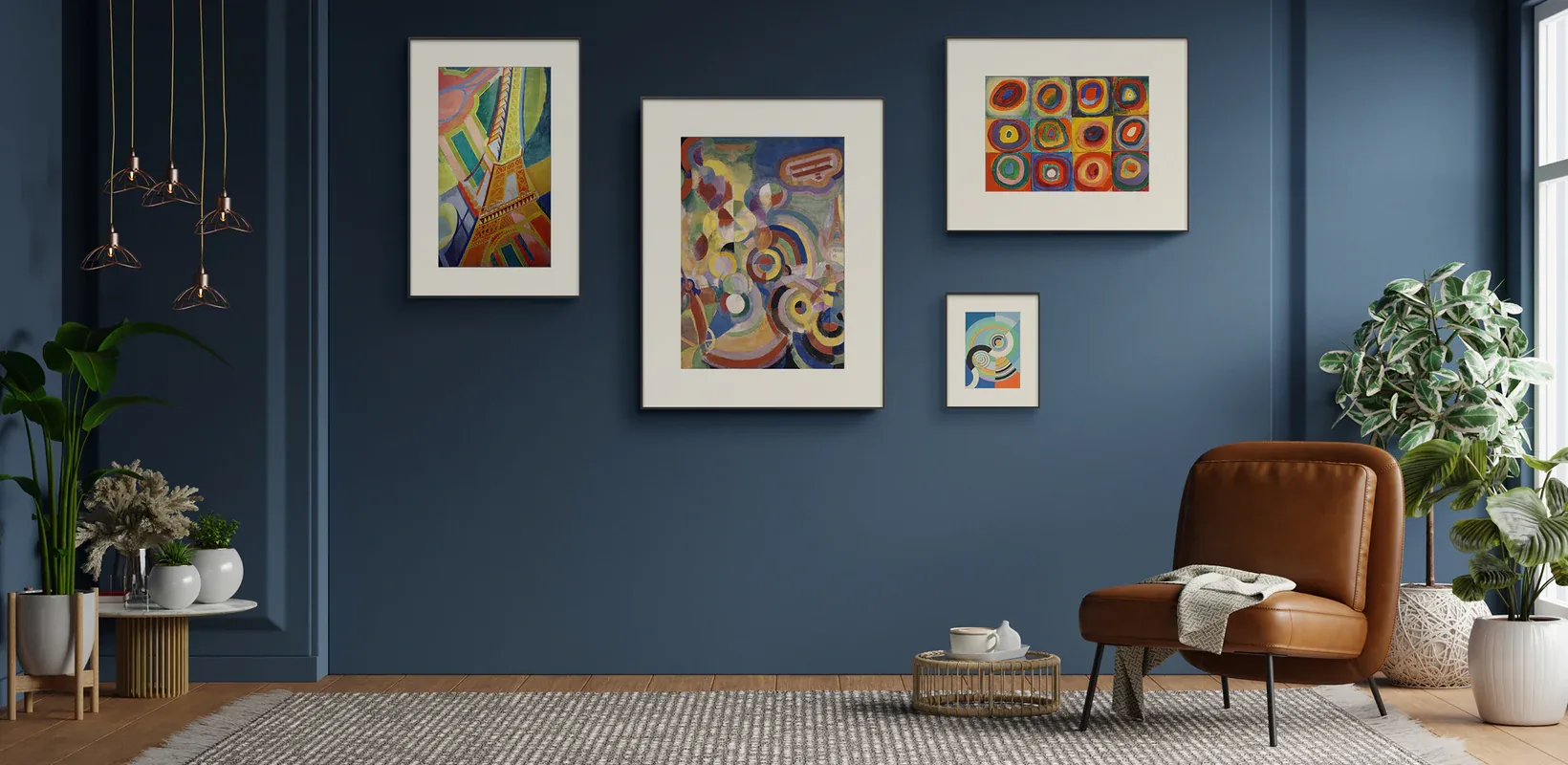
Best colour E-Ink photo frames in 2026
Every major cordless art frame compared on panel, price, battery and content app.
Read Insight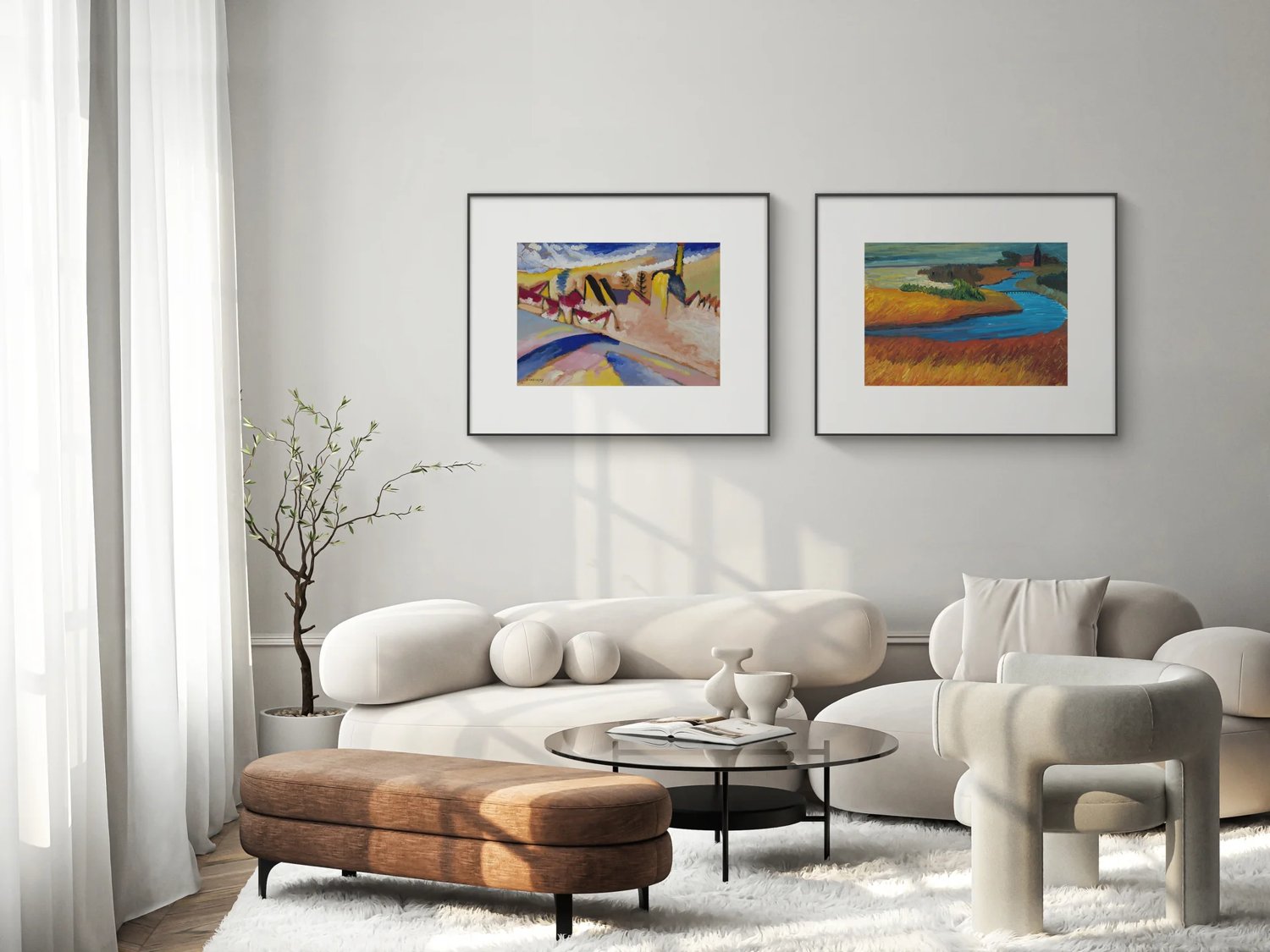
E-Ink picture frames explained
How reflective frames work, why they look like paper, and what to check before buying.
Read Insight
Rendering and device technology
How einksmart prepares images for reflective colour panels, from dithering to device control.
Review TechnologyPlanning a sample or a commercial deployment?
Choose a finished frame, an OEM insert or a project display before comparing quotes.
- Canvas 13.3 CNC · Art displays, branded spaces and small pilot deployments
- Canvas 13.3 Insert · Frame brands, OEM programs and custom enclosures
- Canvas A2 · 28.5 · Hotel lobbies, gallery information and A2 retail posters
- Canvas 31.5 · Landscape information boards, retail and branded interiors
Canvas supply information updated September 23, 2026. Competitor pricing retains the original article reference date; confirm current offers with each supplier.