Short answer
A hotel lobby pilot should prove three things in 30 days: the wall looks calm enough for hospitality, the content refreshes without reprinting, and the operations team knows exactly who owns updates. The playbook: 3–5 color E-Ink surfaces in high-dwell positions, a pre-agreed 30-day content calendar, one named content owner on each side, battery installation with zero electrical work, and four KPIs reviewed at day 30 before any expansion into rooms, elevators or cultural corridors.
Key facts
- This is a scenario playbook, not a claimed customer case — every figure is a planning framework, and verified pilot data will replace it as deployments complete.
- The pilot goal is operational proof, not maximum hardware count.
- Battery color E-Ink installs like framed art: no conduit, no electrician, months per charge, and up to 99% less energy than LCD signage for daily-update content.
- Each pilot links four things: content, device placement, refresh cadence, and support responsibility.
Why the lobby is the right first room
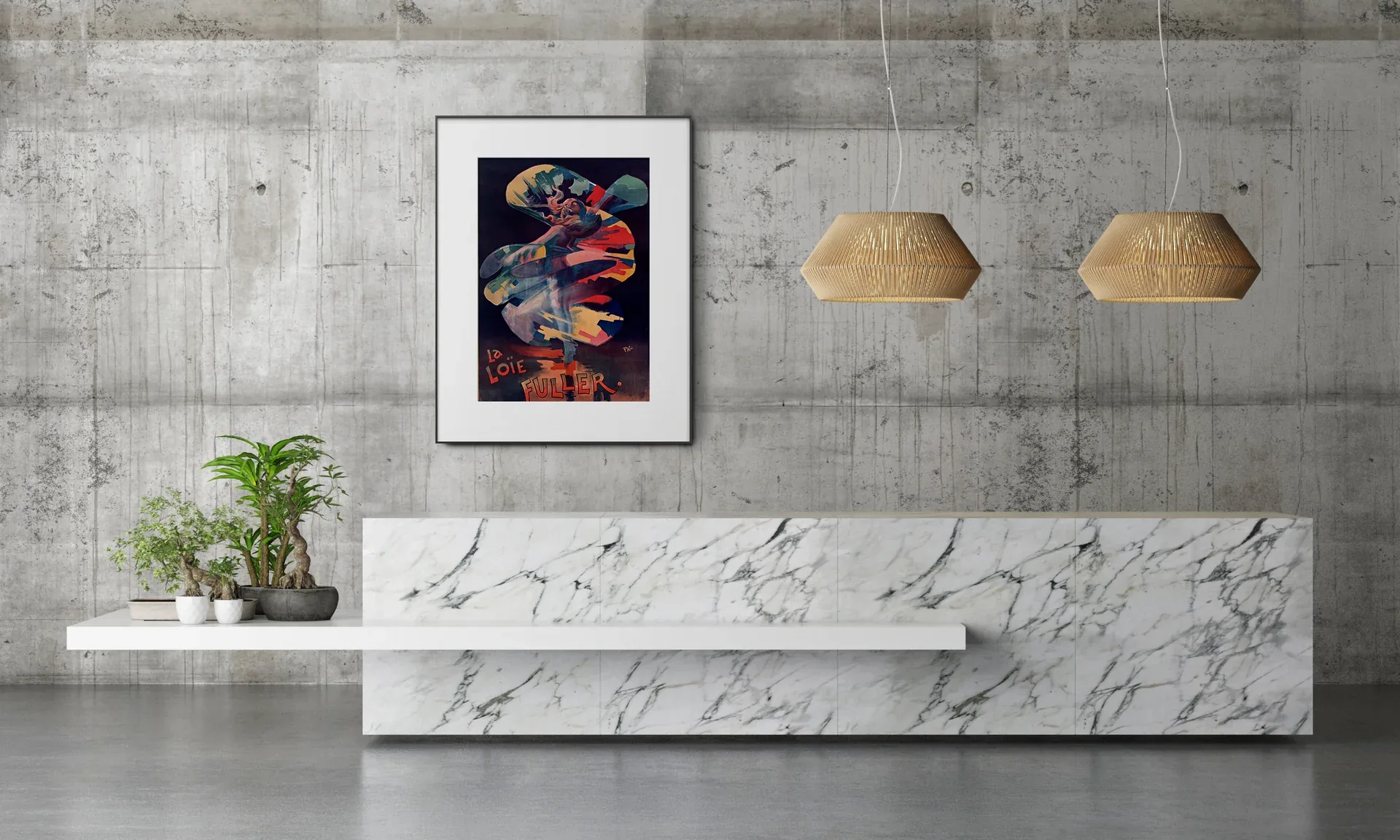
The lobby concentrates every condition an E-Ink pilot needs: long guest dwell, daylight, design pressure against glowing screens, and content that already changes monthly. Hotels reprint lobby posters constantly — seasonal greetings, event notices, F&B promotions, local culture features. Each reprint has design, print and logistics cost, and every printed poster is out of date the moment plans change. Meanwhile, most hotel design teams resist adding another LCD to a curated interior, for reasons we detail in Color E-Ink vs LCD digital signage: emitted light reads as advertising, not hospitality.
Color E-Ink resolves the standoff. The surface reads as framed print — matte, reflective, dark at night — while behaving as managed digital signage underneath: scheduled, centrally updated, instantly correctable. That combination is why hospitality is consistently the first vertical ePaper signage vendors target.
Pilot scope: the five-wall matrix
Start with the walls guests actually wait in front of. Our recommended pilot set:
| Position | Content job | Suggested format | Why it earns its place |
|---|---|---|---|
| Reception backdrop | Brand story, VIP welcome, seasonal art | 31.5" portrait | Longest forced dwell; sets arrival tone |
| Elevator waiting area | Event notices, F&B promotion | 25.3" or 31.5" | Captive 30–90 second audience |
| Breakfast entry | Menu highlights, today-at-the-hotel | 13.3" landscape | Daily refresh proves the workflow |
| Cultural story wall | Local art and neighborhood features | 2–3 × 13.3" gallery set | Differentiates the property; PR-friendly |
| Concierge desk (optional) | Weather, events, transit notes | 7.3" or 13.3" stand | Micro-format proves desk-level use |
Source: einksmart pilot design framework, 2026. Formats reference E Ink Spectra 6 panel sizes.
Resist the urge to add more walls. Five surfaces are enough to test guest response, content ownership, maintenance load and partner support — the four questions that decide expansion — while keeping the pilot reviewable in a single walk-through.
Hardware: what hangs on the wall
Every unit is a battery-powered color E-Ink display in a real frame — wood or metal moldings, cut matboard, picture-rail mountable. The display stack is E Ink Spectra 6 (roughly 60,000 print-like colors, ~12-second refresh, zero power on a static image — see how the technology works). The frame stack is deliberately traditional, because the pilot's first KPI is aesthetic acceptance by the design team.
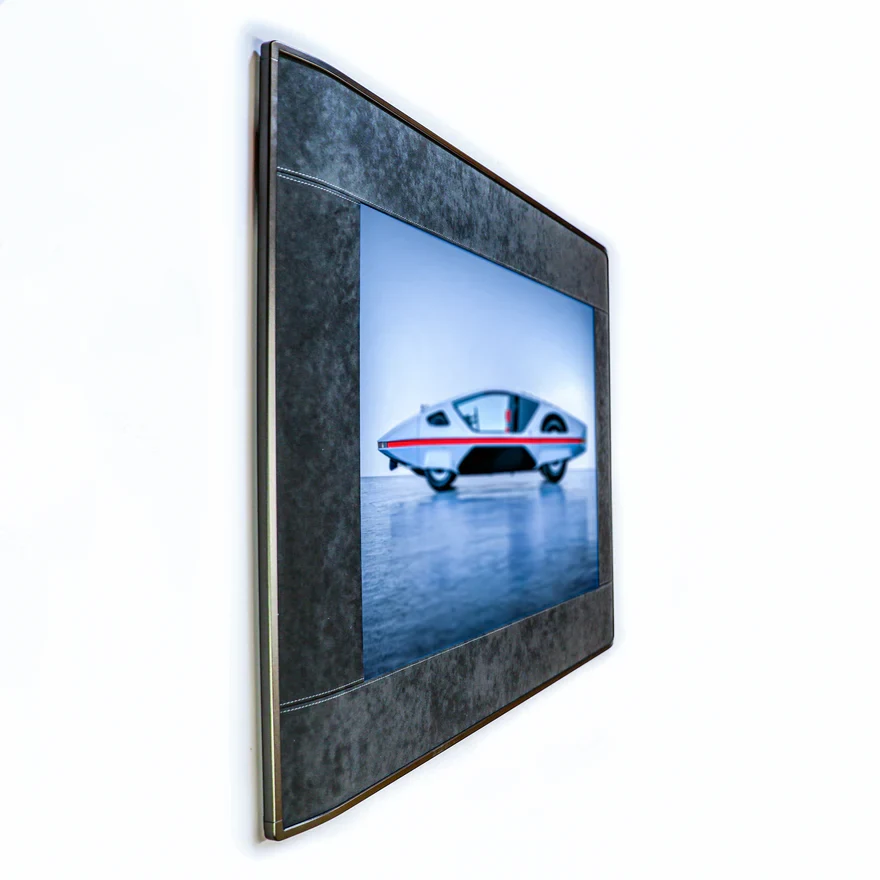
For properties preferring an enterprise signage stack, Samsung's EMDX color e-paper line (13"/32", under 0.005 W static, managed via the VXT CMS) validates the same architecture from a tier-one vendor — we cover it in our signage comparison. The playbook works with either supply route.
The 30-day content calendar
Agree the full calendar before installation — the pilot tests a workflow, not a screen. A proven first-month structure:
| Week | Scheduled content | Workflow being tested |
|---|---|---|
| Week 1 | Launch set: seasonal artwork + brand story + welcome themes | Initial provisioning; design-team sign-off |
| Week 2 | First rotation: new art set; one mid-week event notice | Scheduled refresh + ad-hoc insert |
| Week 3 | Local culture story set; F&B weekend promotion | Multi-wall coordination; template reuse |
| Week 4 | VIP arrival themes; month-end review set | Same-day personalization; KPI collection |
| Always armed | Emergency/ops notice template | Push-priority path, tested once |
Source: einksmart managed content framework, 2026.
The deliberate mix — scheduled rotations plus two unscheduled inserts — demonstrates the core promise: updates are a managed service with a calendar, not a design request every time someone books the ballroom.
Governance: who owns what
Pilots fail on ownership, not hardware. Name one person per row before day one:
| Responsibility | Hotel side | Platform partner side |
|---|---|---|
| Content approval | Front-office or marketing lead (named) | — |
| Calendar execution | — | Content operations (einksmart platform) |
| Ad-hoc requests | Duty manager may trigger templates | SLA on turnaround (agree hours, not days) |
| Device health | Facilities walk includes visual check | Remote monitoring; battery alerts |
| Battery charging | Quarterly round folded into existing walks | Schedule + spare-unit swap option |
| Day-30 review | GM or resident manager | Pilot report with KPI data |
Source: einksmart pilot governance template, 2026.
Installation and energy: the quiet economics
No conduit, no electrician, no permits: units hang on picture hardware in an afternoon, and the estate's electricity line barely moves. E Ink documents ePaper signage at up to 99% less energy than comparable LCD for daily-update content — small enough that solar can run outdoor units off-grid — and Samsung specifies its 32" e-paper sign at under 0.005 W holding a static image. For hotels with published sustainability targets, a lobby that swaps monthly print runs and powered screens for battery ePaper is a reportable ESG line item, not just an aesthetic upgrade.
Budget shape: what a pilot actually costs
Think of the pilot as three budget lines — hardware, content service, and nothing else. The absent lines are the point: no electrical works, no structural mounting, no CMS server project, no per-wall installation crew. Hardware scales with panel size (13.3-inch units sit in consumer-adjacent pricing; 25.3–31.5-inch units carry the large-panel premium detailed in our 2026 frame buyer's guide). The content service line covers calendar operations, template design and SLA support — the part that makes the wall a managed surface rather than a device the hotel now owns and worries about.
Two budget behaviors we recommend to every operator: first, price the pilot against the print line it displaces (design + print + logistics + disposal, monthly, multiplied by the walls in scope) — most lobbies are already paying a recurring content cost, just an analog one. Second, treat pilot hardware as returnable: a good partner offers a buy-back or credit path into Phase 2, so the decision at day 30 is about expansion, not sunk cost.
The four ways lobby pilots fail — and the pre-commitments that prevent them
- Nobody owns approval. Content stalls in a group chat; walls go stale; the pilot "proves" e-paper is static. Prevention: the governance table above, signed before installation.
- The calendar is invented weekly. Each refresh becomes a creative project and the operational-load KPI explodes. Prevention: the full 30-day calendar agreed up front, with only two planned ad-hoc inserts.
- The walls are wrong. Units go where power and convenience suggested, not where guests dwell — response is unmeasurable. Prevention: the five-wall matrix; pick dwell, not convenience (battery power removes the excuse).
- Success has no number. Day 30 arrives with anecdotes and no decision. Prevention: the four KPIs, with targets written down at kickoff and a GM review booked in the calendar from day one.
None of these failures involve the display technology. That is the playbook's core lesson: the hardware is the solved part; the pilot exists to prove the workflow and the ownership model.
Measurement: the four KPIs that decide expansion
- Operational load. Staff minutes per content update, before vs during pilot. Target: updates handled inside the managed calendar, near-zero hotel effort.
- Content freshness. Refreshes shipped on schedule vs planned. Target: 100% of calendar plus both ad-hoc inserts inside SLA.
- Guest response. Front-desk mentions, review-site comments, staff observations — optionally quantified with anonymous dwell measurement (our group's Pyroglaux footfall analytics pairs naturally here).
- Displaced print cost. Posters not reprinted during the month, at the property's actual print+logistics rate.
Review all four at day 30 with the GM. Expansion is justified when operational load stayed near zero and at least one of the other three moved visibly.
Phase 2: where the model rolls next
The lobby pilot is the template; the estate is the business case. Natural expansion order: elevator lobbies on guest floors (captive dwell, no power at the wall — ePaper's strongest structural advantage), meeting-room and event-space doors (schedule cards), F&B entrances (daily menus), cultural corridors (gallery sets), and finally in-room art as the premium tier. Each phase reuses the same calendar, governance table and KPI sheet — change the walls, keep the playbook. Partners running multi-property groups can standardize the whole package through the einksmart partner program.
Why pilot now: the category has crossed the line
E-paper is projected to grow roughly 30% annually through the late 2020s, and 2026 brought the two signals procurement teams wait for: a tier-one vendor (Samsung EMDX) and large formats up to 75" shown at NRF. Early hospitality pilots are cheap options on a category that is clearly arriving:

The property that runs its 30-day pilot this year owns the internal data — and the guest-facing story — before competitors start asking vendors the same questions. Our hotel solutions page and platform overview show what ships in the pilot kit; talk to the team to scope one.
FAQ
Why call this a playbook instead of a case study?
Because it avoids inventing customer results before a verified deployment exists. Every number is a planning framework; verified case data will replace it as pilots complete.
How many walls should the pilot start with?
Three to five: reception, elevator waiting, breakfast entry, a cultural wall, optionally a concierge frame. Narrow scope keeps ownership and measurement clean.
Does installation require electrical work?
No. Battery units hang on picture hardware and run months per charge — no conduit, electrician or permits.
Who owns content updates?
One named hotel owner approves a scheduled calendar executed by the platform partner; duty managers can trigger pre-approved templates.
What KPIs should the pilot track?
Operational load, content freshness, guest response (optionally dwell-measured), and displaced print cost — reviewed at day 30.
What is the conversion goal?
A scoped pilot conversation with roles, calendar and success criteria agreed before hardware ships.